Lafayette Hospital + Clinics

Rehabilitation

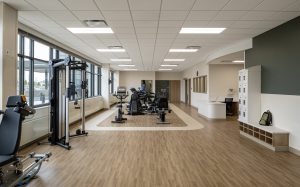
Lafayette Hospital + Clinics provide rehabilitation to people of all ages and diagnoses. Rehabilitation is the process of helping an individual achieve the highest level of function, independence, and quality of life possible. It helps restore the individual to optimal health, functioning, and well-being.

Our trainers specialize in: Athletic Trainer, Physical Therapists, Physical Therapist Assistants, Occupational Therapists, Speech and Language Pathologists, Cardiopulmonary Therapists

Services are provided to patients admitted to the hospital including observation, inpatient, and swing bed as well as outpatients, home health patients through Homeward Bound, many school districts in Lafayette County, and in the natural environment to infants eligible for the Birth to Three program. A physician referral is required for therapy evaluation and treatment. Contact your primary care physician if you feel our therapy services could benefit you or contact the Rehabilitation Department at (608) 776-5744 with any questions.

The department is staffed by:

  • Athletic trainer
  • Occupational Therapists
  • Physical Therapists
  • Physical Therapist Assistant
  • Speech and Language Pathologists

Services are provided to patients admitted to the hospital including observation, inpatient, and swing bed as well as outpatients. Home health services are provided through Homeward Bound. School-based services are provided for many area school districts. Children who are eligible are seen in their natural environments through the Birth to Three Program of Lafayette County. A physician referral is required for therapy evaluation and treatment. Please contact your provider if you feel our therapy services could benefit you. You can contact the Rehabilitation Department with any questions or to schedule an appointment at 608-776-5744.

Rehabilitation Providers

Physical Therapy

Physical Therapy provides treatment to individuals who have pain, disease, injury or impairment that limits their ability to perform sports, work, leisure or other daily activities. Physical therapists also educate and assist people to maintain a healthy lifestyle and prevent injury. Physical Therapists can educate and make recommendations for workplace design, stress management, relaxation training, and Wellness programs.

Following are diagnoses that can be treated by physical therapy:

  • Neuromuscular disorders (i.e. stroke, head injury, Multiple Sclerosis, Cerebral Palsy, Parkinson’s disease)
  • Post-orthopedic surgery (i.e. total joint replacements, rotator cuff repair, ACL reconstruction, fractures)
  • Low back or neck pain
  • Fractures, Sprains, and Strains
  • Sports Injuries
  • Work-related injuries
  • Arthritis, bursitis or tendinitis

  • Balance disorders
  • Urinary incontinence
  • Fecal incontinence
  • Constipation
  • Pelvic pain
  • Vertigo/vestibular
  • Lymphedema

Treatments can include:

  • Dry needling
  • LSVT BIG program for patients with Parkinson’s Disease
  • Gait training
  • Therapeutic and home exercise programs
  • Neuromuscular re-education
  • Manual therapy
  • Ultrasound/phonophoresis
  • Electrical stimulation
  • Mechanical traction of the cervical or lumbar spine

  • Lymphedema
  • Vertigo/vestibular treatments
  • Kinesio taping
  • Pelvic health
  • TENS instruction
  • Iontophoresis
  • Instrument assisted soft tissue mobilization (IASTM)
  • Cupping

Occupational Therapy

Occupational Therapy focuses on functional, day to day activities which a person needs or wants to be able to do. These tasks can be as basic as feeding yourself or as complex as caring for your home or meeting job requirements. We work with people all across the life span, to help them recover from injuries and illnesses and to adapt so that they can still be independent even if some problems remain. Problems that can be treated by occupational therapy include:

  • Joint replacements or other orthopedic surgery
  • Developmental Delay
  • Mental Health conditions
  • Neurological conditions such as Parkinson’s disease, stroke, traumatic brain injury, multiple sclerosis, cerebral palsy
  • Driving component skills screening and assessment
  • Cognitive assessment/retraining/adaptation focusing on functional tasks
  • Rehabilitation for hand, wrist, and elbow conditions and injuries, including orthotics fabrication and management
  • Self-care training including adaptions and strategies
  • Home safety training
  • Pediatric OT for fine motor skills, self-care skills, and sensory processing differences as well as consultation for sleep disturbances and feeding

Speech and Language Pathology

Speech Language Pathologists work with a variety of patients who may need assistance in communication, cognition, speech/language, voice, and dysphagia treatment. Patients who require speech therapy may range from infants to geriatrics. SLPs evaluate an individual’s specific needs and determine the appropriate treatment plan for the patient. Diagnoses that are treated by the Speech Language Pathologist include:

  • Alternative and augmentative communication
  • Aphasia
  • Dysarthria
  • Apraxia of speech
  • Articulation disorders
  • Fluency disorders such as stuttering
  • Early intervention including language disorders and delays
  • Voice disorders caused by vocal cord abnormalities (vocal nodules, cysts, polyps, paralysis)

  • SPEAK OUT! Voice treatment for Parkinson’s Disease
  • Cognition (executive functioning, attention, problem solving, memory)
  • Swallowing assessments
  • Clinical bedside screen
  • Videofluoroscopy Swallow Study
  • Dysphagia Treatment
  • Pediatric Feeding including dysphagia and oral aversion treatment

Athletic Training

Athletic Trainers (ATs) are multi-skilled healthcare professionals who specialize in the prevention, assessment, treatment, and rehabilitation of sport related injuries/illnesses. Athletic Trainers can be seen in a variety of settings, such as schools, clinics, and even businesses. Whether you are an athlete, weekend warrior, or have a physically demanding job, an Athletic Trainer can evaluate your weakness or injury and give recommendations to improve function. They will do this through education in stretching and functional exercises, as well as ways to keep proper form to prevent further injuries. Athletic trainers can provide:

  • Injury evaluation and diagnosis
  • Concussion Care
  • On-field injury care
  • Injury Treatment and rehabilitation
  • Protective taping and padding